
え、あのバズ曲どうなったの?AIと音楽著作権のヤバい話
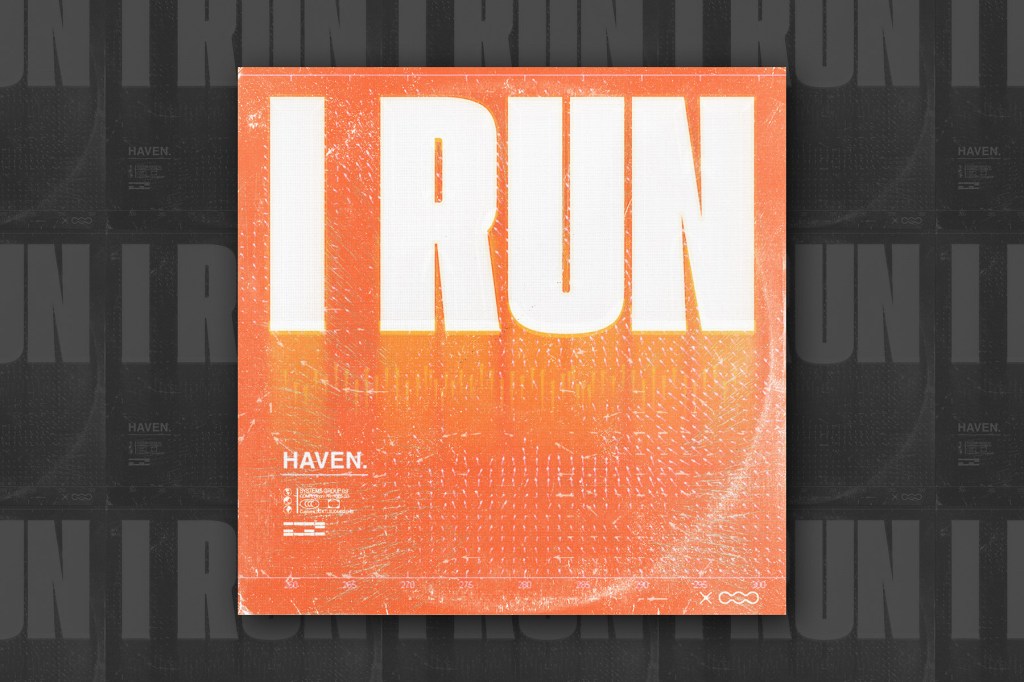
TikTokで話題沸騰!謎の楽曲「I Run」
突如としてTikTokを席巻したダンス/EDMトラック「I Run」。アーティスト名義はHAVEN.。
10月10日に公開されたティーザー動画は、瞬く間に数百万回再生を記録し、
「マジで神曲!」
「今すぐリリースして!」
といったコメントが殺到しました。

期待の新星、HAVEN.(ハリソン・ウォーカーとジェイコブ・ドナヒューによる音楽プロジェクト)。
しかし、そのデビュー曲を巡って、今、とんでもない事態が巻き起こっているんです。
え?リリース直後に楽曲削除!?一体何が?
リリース後、「I Run」はストリーミングサービスで何度も削除、再アップロードされるという異常事態に。
チャート急上昇目前だったにも関わらず、その勢いは完全にストップしてしまいました。
この曲が注目を集めたきっかけは、人気R&Bシンガー、Jorja Smith(ジョルジャ・スミス)に酷似した女性ボーカル。
ジョルジャ本人がTikTokで
「これ、一体誰の声?」
と疑問を投げかけたことで、騒ぎはさらに大きくなりました。
(ジョルジャ本人は「私じゃない」とコメント)
HAVEN.側も、一時的に「#jorjasmith」というハッシュタグを付けてSNS投稿するなど、
話題に乗っかるような動きを見せていました。
AIで作られたジョルジャ・スミスのニセ声!?
ここで浮上したのが、「I Run」はジョルジャ・スミスの声をAIで生成したディープフェイクではないか?
という疑惑です。

10月下旬、「I Run」はIsekai Records、Broke Records、AAO Recordsからリリースされ、
Spotify USチャートで11位、グローバルチャートで25位にランクインするほどの大ヒットとなりました。
しかし、その直後、楽曲はストリーミングサービスから削除されてしまったのです。
ジョルジャ・スミスが所属するThe Orchard(オーチャード)に加え、
アメリカレコード協会(RIAA)や国際レコード産業連盟(IFPI)が、
「I Run」に対して著作権侵害などを理由に大量の削除要請を出したことが原因でした。
著作権侵害?それとも表現の自由?アーティスト側の主張
Broke Recordsは、HAVEN.が楽曲の権利を所有していると主張し、
複数の異議申し立てを行っています。
(The Orchardはコメントを拒否)
HAVEN.のドナヒューとウォーカーは、ProToolsで楽曲を制作した証拠となるスクリーンショットや動画を公開。
ただし、楽曲制作にAIによるボーカル処理を使用したことは認めています。
彼らが使用したのは、AI音楽ジェネレーターのSuno。
ウォーカー自身の声を、ジョルジャ・スミスを参照せずに女性の声に変換したと説明しています。
Sunoへのプロンプトには、「ソウルフルなボーカルサンプル」といった要求が含まれていたそうです。
HAVEN.は声明で
「AI支援によるボーカル処理を使用したことは事実。
しかし、HAVEN.のアーティストは実在する人間であり、素晴らしい音楽を作りたいだけだ」
とコメントしています。
AI音楽生成の闇?著作権侵害訴訟との関連
Sunoでは、特定のアーティストや楽曲名を指定することは禁止されています。
しかし現在、Sunoはソニー、ユニバーサル、ワーナーという大手レコード会社3社から、
著作権侵害で訴えられています。
ジョルジャ・スミスはソニーミュージック傘下のThe Orchardに所属しているため、
彼女の楽曲がSunoのAIトレーニングに使用された可能性も否定できません。

専門家によれば、Sunoのユーザーは、ABBAやジェームス・ブラウンといったアーティストの楽曲に酷似した結果を、
意図的または偶然に得ることができるそうです。
音楽プラットフォームの対応:AI生成コンテンツの線引きは?
Spotifyは、「あなたのコンテンツが第三者の録音権を侵害しているという申し立てを受けました」
という通知を送付。
TikTokも「許可されていない著作権で保護された音楽が含まれています」
として楽曲をミュートしました。
弁護士のテレサ・ワイゼンバーガーは、
「声が似ているだけでは著作権侵害にはならない。
声はパブリシティ権(氏名、肖像、声などを商業的に利用されない権利)によって保護される」
と指摘しています。
AIとディープフェイクの台頭を受け、
テネシー州では声のクローン作成を禁止する法律(ELVIS Act)が可決。
連邦政府も同様の法律(NO FAKES Act)を検討しています。
弁護士のケネス・アンダーソンは
「NO FAKES Actの現状を見直し、早急に法整備を進めるべきだ。
AIによる問題は急速に音楽業界を侵食している」
と警鐘を鳴らしています。
権利者 vs アーティスト:終わらない戦い?
HAVEN.のレーベルは、削除された楽曲を何度も再アップロード。
まるでモグラ叩きのような状態に陥っています。
ワイゼンバーガー弁護士は
「異議申し立て後、訴訟が提起されなければ、プラットフォームは楽曲を再公開できる。
しかし、プラットフォームがそうしないのは、この楽曲がもたらすPR上の問題を考慮しているからだろう」
と分析します。
Broke Recordsは、今回の騒動を
「大手レーベルによる巧妙なキャンペーンによって、独立系プロデューサーソングライターであるHAVEN.がプラットフォームから排除されている」
と非難しています。
AI時代の音楽:クリエイティビティと権利保護の狭間で
「I Run」を巡る騒動は、AIが生成した音楽に関する議論に火をつけました。
多くの音楽ストリーミングサービスは、AIに関する明確なポリシーを持っていません。
DeezerやSoundCloudのようにAI生成作品を制限するプラットフォームもありますが、
「I Run」のように人間の手が加わっている作品は、その対象外となることが多いのが現状です。

しかし、AIによるディープフェイクの増加を受け、
プラットフォーム側もパブリシティ権侵害に対する取り締まりを強化しています。
Spotifyは先月、AIの悪用に対するポリシーを強化し、
なりすまし行為に対する保護を強化することを発表しました。
今回の「I Run」の削除も、このポリシーが適用された可能性があります。
(Spotifyはコメントを拒否)
新たなスタート:人間の声で再レコーディング!
現在、HAVEN.はケイトリン・アラゴンというシンガーをフィーチャーし、
「I Run」を再レコーディングしています。
ケイトリンは、TikTokで「I Run」をカバーした動画を投稿したことがきっかけで、
HAVEN.のチームに見出されました。
HAVEN.は、人間のボーカルで再びバズを起こし、
新たなキャリアをスタートさせようとしています。
今回の騒動は、AI時代の音楽制作における課題を浮き彫りにしました。
クリエイティビティと権利保護のバランスをどのように取るのか、
業界全体で真剣に議論していく必要がありそうです。
Even before its release to streaming services, “I Run,” a dance/EDM track by the artist HAVEN., was a viral sensation online, amassing millions of plays on TikTok after it was teased on Oct. 10. “I love this song so much,” said one TikTok commenter. “DROP THIS RIGHT NOW PLEASEEEE,” commented another.
Related
For HAVEN., a new artist project from British producers Harrison Walker and Jacob Donaghue, who also makes music under the name Waypoint, it was the kind of debut that could change the trajectory of their lives. But now, a swirl of legal complaints and takedown notices have engulfed the song, resulting in it being removed and reuploaded to streaming services multiple times — and stopping its momentum just as it was poised to reach the Billboard charts.
The frenzy of activity around “I Run” prompted multiple A&Rs at major and independent music companies to look into signing the track and the people that created it as it awaited official release. It also caught the attention of the popular UK R&B singer Jorja Smith. The uncredited female vocalist on “I Run” sounded eerily similar to Smith, prompting the singer to to post a video of herself on TikTok using it. She asked in the caption: “who actually is this?” and noted in a reply to a comment “it’s not meeeee” when fans asked if she sang on the track or if it was AI. (The video has since been deleted). Around that time, HAVEN. jumped in, adding #jorjasmith to a now-deleted social post about the song, according to a member of their team. “It was more so just embracing that it does sound like her,” a spokesperson for HAVEN. said. “It became an organic trend.”
That’s when questions started circulating about the origins of HAVEN.’s viral track — and whether or not it was an unauthorized AI deepfake of Smith’s voice. Ultimately, the song was released in late October by Isekai Records, Broke Records and AAO Records, and it continued to amass major listenership — so much so that it quickly reached #11 on the U.S. Spotify chart and #25 on Spotify globally. Meanwhile videos using the song kept going viral on social media, including one in which the rapper Offset apparently played the song during a Boiler Room DJ set, with the video overlaid with text that said, “Unreleased Jorja Smith.” (The song was not actually used during Offset’s recent Boiler Room set.)
Just as the song was taking off, it was taken down from streaming services. The Orchard — to whom Smith is signed — as well as the Recording Industry Association of America (RIAA) and International Federation of the Phonograph Industry (IFPI), issued dozens of takedown notices for “I Run” upon its official release, according to screenshots of the notices, alleging various issues with the song, including that the song “misrepresents” another artist and that it constitutes copyright infringement.
Related
As a result of the dispute, the song has also been withheld from the Billboard charts, including the Billboard Hot 100, on which some chart prognosticators had predicted it would debut this week. Billboard reserves the right to withhold or remove titles from appearing on the charts that are known to be involved in active legal disputes related to copyright infringement that may extend to the deletion of such content on digital service providers.
Broke Records tells Billboard that it filed dozens of counter-notices, asserting HAVEN.’s ownership of the song and noting that no lawsuit has been filed against them to date in association with the song. (The Orchard declined to comment.)
Donaghue and Walker maintain that they wrote and produced the song in ProTools, sharing screenshots and videos of the ProTools session files and stems with Billboard. They admit, however, that “AI-assisted vocal processing” was used to “transform solely [their] voice” in the song. Specifically, they say they used AI music generator Suno to turn Walker’s voice into that of a woman’s — without referencing Smith. According to Suno prompts shared with Billboard, the producers wrote into the model a prompt that included, among other requests, “soulful vocal samples” to get the voice they ultimately used on the song.
“It’s been such an honor to see the love and support for ‘I Run’ these past few weeks,” HAVEN. said in a statement to Billboard. “What started as something fun and experimental between two producers and music-lovers ended up taking the internet by storm. I’m aware that AI has become part of that storm. It shouldn’t be any secret that I used AI-assisted vocal processing to transform solely my voice for ‘I Run.’ As a songwriter and producer I enjoy using new tools, techniques and staying on the cutting edge of what’s happening. To set the record straight, the artists behind HAVEN. are real and human, and all we want to do is make great music for other humans.”
Related
Suno does not allow users to request specific artist or song names. But the company is currently in the midst of a blockbuster lawsuit with the three major music companies — Sony, Universal and Warner — over allegations of widespread copyright infringement of the majors’ sound recordings during the AI training process. Given Smith is signed to The Orchard, a Sony Music-owned distributor, it is possible her sound recordings were used in Suno’s training. According to the lawsuit and to AI music expert Ed Newton-Rex in an article for Music Business Worldwide, users can find savvy or accidental ways to prompt Suno into providing results that seem to contain recognizable pieces of intellectual property from artists like ABBA, James Brown, Michael Buble and more.
The takedowns list a variety of reasons for the request for removal, according to emails obtained by Billboard, including one from Spotify that says, “We have received a complaint that your content infringes the sound recording rights of a third party. While this claim is under investigation, the content has been removed.” Another from Spotify says the content “violates exclusive rights.” A third reads, “Spotify may remove content that misrepresents a track as originating from or featuring an artist or that uses an artist’s name in a misleading way.” One from TikTok also lists the reason why the track is muted as “it contains unauthorized copyrighted music.”
“Sound recording copyrights are not going to protect her voice if the voice sounded like her. There would have to be a sample of her sound recordings,” says Theresa Weisenberger, lawyer and co-lead at BakerHostetler’s AI practice, adding that voices are only protected by publicity rights — the legal right that varies state-to-state in the U.S. which protects one’s name, image and likeness from exploitation.
Historically, these rights have been mostly limited to commercial contexts, like misleading endorsements. The singer Bette Midler once famously sued the Ford Motor Co. over ads featuring a Midler impersonator who was hired by the company. Amid the boom in AI and deepfakes, however, lawmakers in Tennessee passed a new law, called the ELVIS Act, to dramatically expand the right to stop voice cloning in any context. And federally, lawmakers are currently considering a similar law, the NO FAKES Act, that would do the same thing nationally.
“I think this ought to be a wake up call for people to look at the status of the NO FAKES Act and to deal with how long it will take to get that moving and into a national uniform law,” adds Kenneth Anderson, an attorney at Rimon Law who recently advised his client, Ben Folds, though a deepfake situation. “We have a problem that is rapidly overtaking the music industry. It’s rampant and it’s increasing.”
Related

To fight the takedowns, HAVEN.’s labels started reuploading the song over and over, leading to a seemingly endless game of whack-a-mole for both sides. The impact on “I Run” became even more pronounced when the song did not appear on The Official Charts in the U.K. or the Billboard charts.
“Once that counter notice is filed and then a lawsuit is not filed, a platform is free to put the song back up if they want to,” explains Weisenberger. “But the fact that platforms aren’t doing that might speak to the PR issue this song causes.”
For Broke, an indie record label founded in 2023, “I Run” was gearing up to be their (and HAVEN.’s) biggest hit yet, and its founders tell Billboard they feel the song is being discriminated against by bigger industry players. “HAVEN., an independent producer-songwriter who created a global breakout hit on his own, is the one being fully de-platformed through a sophisticated campaign by a major label,” the label said in a statement to Billboard. “It is difficult to imagine this recording, if released by a major label, being treated in the same way as HAVEN.”
The song has become a lightning rod for conversations around generative AI use in the creation of popular music. To date, some music streaming services still do not have AI-specific policies in place, and those that do, like Deezer and SoundCloud, tend to only penalize fully AI-generated works, not something like “I Run,” which contains significant human input. As Billboard reported in 2023, however, an increasing number of platforms have broadened the ability of rightholders to issue takedowns when publicity rights — the right to one’s name image likeness and voice — are violated, due to the rise of AI-generated deepfakes. This is done on a voluntary basis and is not required by law.
Related
Spotify added to these publicity rights protections just last month when it announced that it was strengthening its policies against negative uses of AI. This included increased protections around impersonation, and according to a source close to the situation, the platform’s impersonation rules did come into play with the takedowns for HAVEN.’s track specifically. The source adds that Spotify tends to side with the party that feels they have been deepfaked. (Spotify declined to comment.)
Now, HAVEN. is gearing up to release a re-recording of the song, featuring the vocals of a singer named Kaitlin Aragon. She was discovered by the team after posting a TikTok video, covering “I Run” which sounds fairly similar to the original. The hope is, for HAVEN.’s team, that they can recapture the same buzz as they achieved with the last version of the song and restart HAVEN.’s career — but this time, with human vocals.


コメント