
【衝撃】能登半島地震の液状化被害がヤバすぎる…!私たちが知っておくべきこと
皆さん、こんにちは!能登半島地震から早数ヶ月。
復興に向けて動き出している一方で、液状化現象の深刻な被害が改めて明らかになりました。
今回は、その驚くべき実態と、私たちが今後どのように備えるべきかについて解説します!
1. 液状化被害の規模がハンパない!東京ドーム〇〇個分ってマジ!?
国立研究開発法人 防災科学技術研究所(NIED)の調査によると、今回の能登半島地震による液状化被害は、石川県、富山県、新潟県、福井県の34市町村で、なんと19.21平方キロメートルにも及ぶことが判明しました。
…ピンと来ない?
なんと、東京ドーム約410個分に相当する広さなんです!
想像を絶する規模ですよね…。
2016年の熊本地震の約4倍というから、その被害の大きさが伺えます。
2. 液状化ってそもそも何?なんで起こるの?
液状化とは、地震の揺れによって地盤が液体状になる現象のこと。
- 砂地や埋立地で起こりやすい
- 地震の揺れで地中の水が上昇し、地盤が支持力を失う
液状化すると、建物が傾いたり、地中から水や砂が噴き出したりするなどの被害が発生します。
3. 過去の地震で液状化した場所が再び…!
今回の調査で、過去の地震で液状化被害を受けた場所が、再び液状化する「再液状化」が確認されました。
これは、一度液状化した地盤は、その後も液状化しやすいことを示しています。
過去の教訓を生かし、対策を講じることが重要です。
4. 被害が大きかった場所は?
特に被害が大きかったのは、以下の地域です。
- 石川県:11.92平方キロメートル(全体の60%以上!)
- 新潟県:3.71平方キロメートル
- 富山県:3.47平方キロメートル
- 福井県:0.12平方キロメートル
日本海側の地域は、海岸から内陸に砂が運ばれやすい地質のため、液状化しやすいと考えられています。
5. 私たちができること!液状化から身を守るために
今回の能登半島地震の被害を受けて、私たち一人ひとりができることは何でしょうか?
- ハザードマップを確認する:自分の住む地域が液状化しやすい場所かどうかを確認しましょう。
- 住宅の耐震性を強化する:専門家による地盤調査や、必要に応じた地盤改良を検討しましょう。
- 防災意識を高める:非常用持ち出し袋の準備や、避難場所の確認など、日頃から防災対策を心がけましょう。
- 情報を共有する:今回の記事や、液状化に関する情報を家族や友人と共有し、防災意識を高め合いましょう。
まとめ:他人事じゃない!備えあれば憂いなし!
能登半島地震の液状化被害は、私たちに大きな教訓を与えてくれました。
液状化は決して他人事ではありません。
備えあれば憂いなし!
今一度、ご自身の住む地域の状況を確認し、できることから対策を始めてみませんか?
未来の安心のために、一歩踏み出しましょう!
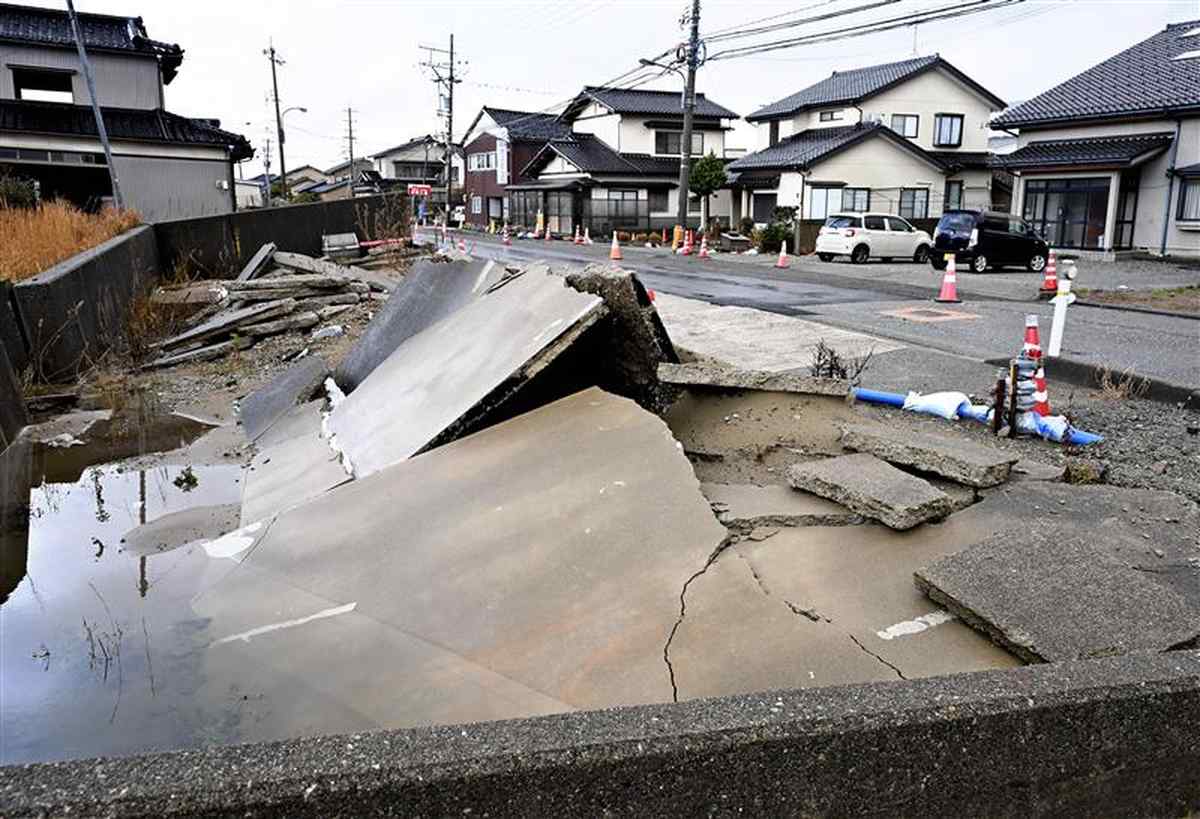
Damage from ground liquefaction caused by the Noto Peninsula Earthquake is seen in Uchinada, Ishikawa Prefecture, on Dec. 24, 2024.
16:03 JST, November 25, 2025
Ground liquefaction caused by last year’s Noto Peninsula Earthquake is estimated to have damaged a total of 19.21 square kilometers of land across 34 municipalities in Ishikawa, Toyama, Niigata and Fukui prefectures, research by the National Research Institute for Earth Science and Disaster Resilience (NIED) has shown.
According to the Tsukuba, Ibaraki Prefecture-based Institute, the damaged areas amount to 410 times as much ground space as that taken up by Tokyo Dome stadium and represent about quadruple the damage from the 2016 Kumamoto Earthquake.
It was also confirmed that some places which had suffered liquefaction in prior earthquakes experienced re-liquefaction when the 2024 quake occurred.
Liquefaction is a phenomenon in which the ground becomes softer due to the shaking from an earthquake. It tends to occur in places where the soil is sandy and on pieces of reclaimed land.
Shigeki Senna, a senior researcher at the NIED who is an expert on structural and seismic engineering, confirmed traces of eruptions of sand and water in the quake-hit areas.
The affected land areas were divided into squares of about 25 meters on each side. If anywhere within a square showed evidence of liquefaction, the entire square was regarded as having been damaged by the phenomenon. The total area was calculated in this way.
By prefecture, the largest amount of liquefaction damage was seen in Ishikawa Prefecture, with 11.92 square kilometers affected, more than 60% of the total.
This was followed by 3.71 square kilometers in Niigata Prefecture, 3.47 square kilometers in Toyama Prefecture and 0.12 square kilometers in Fukui Prefecture.
Using the same method, the area of land affected by liquefaction after the 2011 Great East Japan Earthquake was calculated at 39.09 square kilometers, 836 times the ground area of Tokyo Dome.
In regions facing the Sea of Japan, strong winds carry sand inland from the seashore. It is thought that the existence of geological strata containing large amounts of sand made liquefaction easier, resulting in damage over a wide area.
At the time of the 2007 earthquake in the Noto Peninsula, Nanao, Ishikawa Prefecture, was hit by strong tremors. At least 13 areas of the city that were near the sea suffered from re-liquefaction due to the 2024 quake.
The ground under the town of Uchinada, Ishikawa Prefecture, experienced large-scale horizontal sliding.
In the same town, two locations which experienced liquefaction in the 1891 Nobi Earthquake, the epicenter of which was in Gifu Prefecture, were found to have suffered from re-liquefaction in last year’s quake.


コメント